
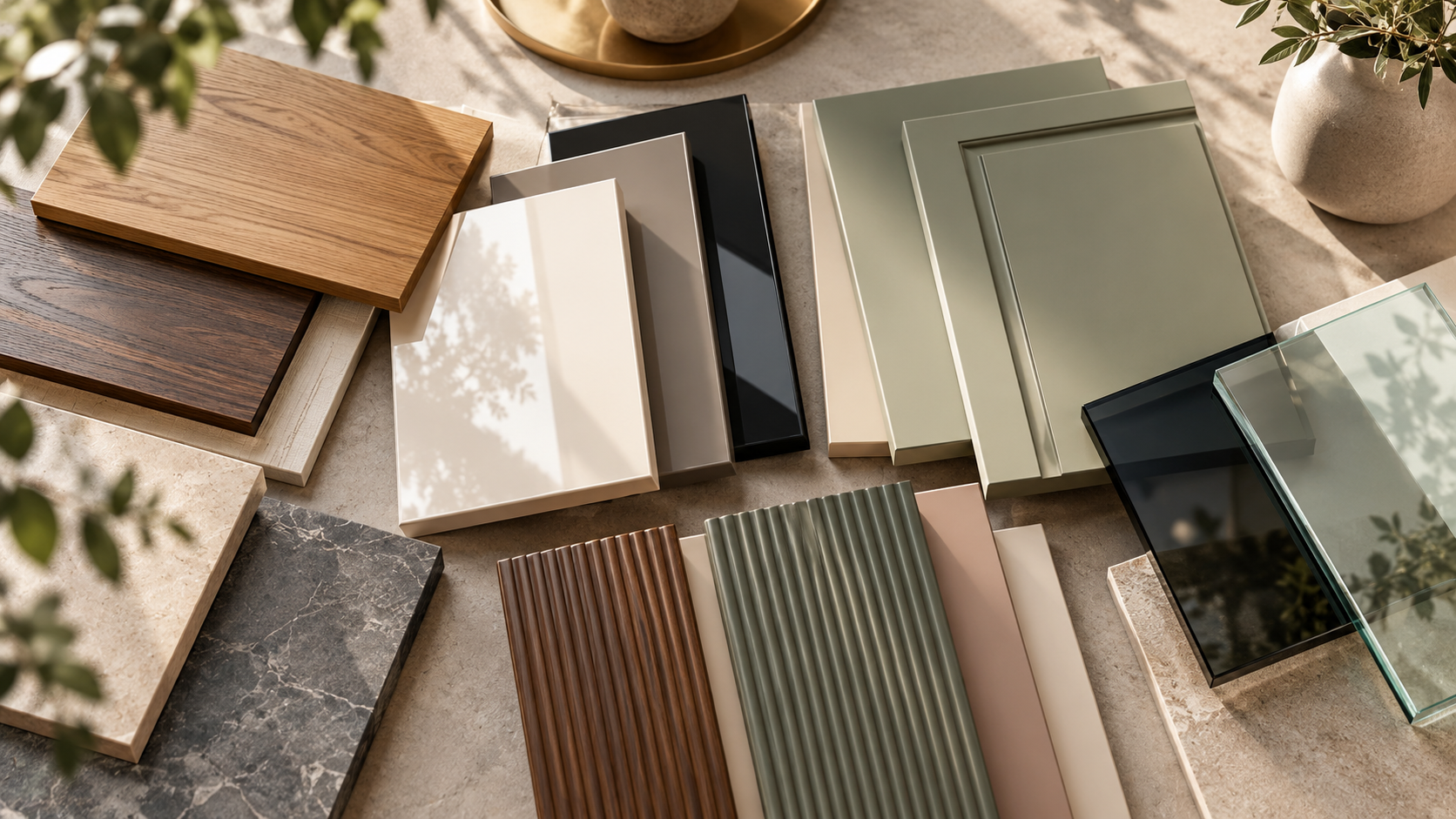
When planning a new home interior, one of the most important decisions homeowners make is selecting the right finish for their furniture and cabinets. Whether it is a modular kitchen, bedroom wardrobe, TV unit, crockery unit or storage cabinet, the finish plays a significant role in determining the overall appearance and longevity of the space.
With options such as laminates, acrylic, PU paint, veneer, membrane and glass finishes available in the market, it is easy to get confused about which one is suitable for your home.
A finish that looks beautiful in a showroom may not necessarily be the most practical choice for everyday use. Some finishes are easier to maintain, while others offer a more luxurious appearance but require additional care.
So, which interior finish should you choose? Let's understand the different types of finishes, their advantages, disadvantages and where they should or should not be used.
1. What Are the Different Types of Interior Finishes?
Interior finishes are the final surface treatments applied to furniture, cabinets and decorative elements. They influence the colour, texture, sheen, appearance and maintenance requirements of your interiors.
Here are some of the most commonly used finishes in Indian homes.
A. Laminate Finish
Laminate is one of the most popular and practical finishes used in modern home interiors. It is a decorative surface sheet bonded to a substrate such as plywood, MDF or another suitable board.
Laminates are available in multiple varieties, including matte, gloss, suede, textured, wooden, metallic and stone finishes.
Advantages
- Available in a wide range of colours, patterns and textures.
- Generally durable and suitable for everyday use.
- Easy to clean and maintain.
- Available in different price ranges.
- Suitable for kitchens, wardrobes, TV units and storage cabinets.
- Offers a practical balance between appearance and cost.
Disadvantages
- Damaged or chipped laminate surfaces can be difficult to repair seamlessly.
- Edge banding and joints may be visible.
- Poor-quality bonding or inadequate edge sealing can lead to peeling.
- Glossy laminates may show scratches and fingerprints more prominently.
Why should you use it?
Laminate is a good choice if you want a durable, low-maintenance and budget-friendly finish. It works particularly well for busy households, children's bedrooms, kitchen cabinets and frequently used storage units.
Why should you avoid it?
Avoid choosing laminate solely based on its appearance or price. If you want a seamless painted appearance, rounded profiles or highly customised detailing, PU paint may be more suitable.
B. Acrylic Finish
Acrylic finish is commonly used in modern kitchens and wardrobes to achieve a smooth, reflective and premium appearance. Acrylic sheets are applied to the furniture substrate to create a sleek surface, commonly in high-gloss finishes, although matte options are also available.
Advantages
- Provides a rich, high-gloss and reflective appearance.
- Available in contemporary colours and designs.
- Creates a sleek and modern look.
- Easy to wipe and clean with suitable cleaning products.
- Can make smaller spaces appear visually brighter.
Disadvantages
- Fingerprints, dust and smudges can be noticeable, particularly on darker glossy surfaces.
- Fine scratches may become visible over time.
- Damaged sheets can be difficult to repair seamlessly.
- Usually costs more than standard laminates.
Why should you use it?
Acrylic is suitable if you prefer a modern, glossy kitchen or wardrobe. It can work particularly well on flat cabinet shutters where you want a clean and reflective appearance.
Why should you avoid it?
If your household has young children, frequent handling or heavy daily usage, consider how much cleaning you are comfortable with. A matte laminate may be a more practical alternative if fingerprints and visible scratches are a concern.
C. PU (Polyurethane) Finish
PU, or polyurethane finish, is a sprayed coating applied to furniture surfaces to achieve a smooth, uniform and customised appearance.
It is available in matte, satin and glossy finishes and allows homeowners to select customised colours that may not be available in standard decorative sheets.
Advantages
- Offers a premium and seamless appearance.
- Available in a wide range of customised colours.
- Suitable for both modern and classic interior designs.
- Can be applied to appropriately prepared flat, curved and profiled surfaces.
- Available in matte, satin and glossy options.
- Damaged areas can sometimes be professionally repaired or refinished.
Disadvantages
- Generally more expensive than standard laminate finishes.
- Requires skilled application and proper surface preparation.
- Can chip or scratch if subjected to hard impact.
- Application and curing may take additional time.
- Repairs may result in visible shade differences if not handled properly.
Why should you use it?
PU finish is a good option when you want a customised colour, a sophisticated satin appearance or a seamless finish for wardrobes, kitchen shutters and designer furniture.
Why should you avoid it?
If you are working with a restricted budget or need a finish that is easy to replace without specialised work, laminate may be a better choice. The final quality of PU also depends heavily on the application process and workmanship.
D. Veneer Finish
Veneer is a thin layer of natural wood applied to a suitable substrate. Unlike printed wood-grain laminates, natural veneer offers genuine wood patterns, with individual variations in grain and colour.
It is commonly used in premium interiors to create a warm, natural and elegant appearance.
Advantages
- Provides an authentic natural wood appearance.
- Every veneer sheet has its own grain pattern.
- Adds warmth and sophistication to interiors.
- Can be polished and refinished, depending on the veneer thickness and condition.
- Works beautifully for TV units, wall panelling, wardrobes and decorative furniture.
Disadvantages
- Generally more expensive than standard laminate.
- Requires periodic care and suitable protective coating.
- Can be affected by moisture, excessive heat and direct sunlight.
- Natural colour and grain variations may occur.
- Requires appropriate polishing and maintenance.
Why should you use it?
Choose veneer if you prefer natural wood aesthetics and want to create a warm, premium interior. It is particularly suitable for feature walls, bedroom furniture and living room panelling.
Why should you avoid it?
If you need a completely uniform colour, minimal maintenance or a surface exposed to frequent moisture and heavy usage, veneer may not be the most practical option.
E. Membrane Finish
Membrane finish uses a PVC foil that is heat- and vacuum-pressed over a prepared furniture shutter, commonly MDF. It wraps around the front, edges and profiles to create a continuous surface.
It is often selected for shutters with grooves, routed patterns and decorative profiles.
Advantages
- Provides a continuous finish over shaped shutters.
- Suitable for classic and decorative cabinet designs.
- Available in various colours and textures.
- Does not require separate edge banding on the wrapped faces.
- Can create a uniform appearance across profiled shutters.
Disadvantages
- Prolonged exposure to heat can cause lifting or peeling.
- Damaged foil is difficult to repair seamlessly.
- Product quality and pressing technique significantly affect performance.
- Direct sunlight may affect certain colours over time.
Why should you use it?
Membrane is suitable for decorative wardrobe shutters, classic kitchen designs and furniture with routed profiles, provided the material and application quality are appropriate.
Why should you avoid it?
Avoid using it close to high-heat cooking appliances without suitable protection. It may also be unsuitable where you expect frequent exposure to heat or where long-term repairability is a major priority.
F. Glass and Lacquered Glass Finish
Glass finishes are commonly used in modern kitchens, crockery units, display cabinets and wardrobes. Lacquered glass has a coloured coating on one side, giving the visible surface a smooth and reflective appearance.
Advantages
- Creates a sleek and sophisticated appearance.
- Reflects light and can make spaces appear brighter.
- Easy to wipe clean when properly installed.
- Works well for display units and selected cabinet shutters.
- Available in different colours and transparency levels.
Disadvantages
- Can crack or break due to impact.
- Requires careful handling and installation.
- Fingerprints and smudges can be visible.
- Usually costs more than basic laminate finishes.
- Requires suitable hardware and support due to its weight.
Why should you use it?
Glass is an excellent option for crockery units, display cabinets and selected kitchen shutters where you want a contemporary and elegant appearance.
Why should you avoid it?
Avoid using ordinary glass in areas where frequent impact is likely. Specify suitable safety glass where appropriate, and consider how much transparency, cleaning and maintenance your household is comfortable with.
2. Matte vs Glossy vs Satin: Which Surface Appearance Should You Choose?
Apart from the material itself, the sheen of a finish also makes a difference to the overall appearance of your interiors.
A matte, glossy or satin finish can create very different visual effects, even when the underlying material or colour remains the same.
Matte Finish
Matte finishes have a soft, non-reflective appearance. They are suitable for contemporary, minimal and understated interiors.
- Advantages: Subtle appearance, reduced glare and a sophisticated visual effect.
- Disadvantages: Certain matte textures may retain oil marks or stains and can require more careful cleaning.
Glossy Finish
Glossy finishes reflect light and create a smooth, polished appearance.
- Advantages: Reflective surface, vibrant appearance and an ability to brighten darker spaces.
- Disadvantages: Fingerprints, dust and scratches may be more noticeable, especially on darker colours.
Satin Finish
Satin finishes offer a balance between matte and glossy surfaces, with a gentle sheen.
- Advantages: Elegant appearance, moderate light reflection and a refined look.
- Disadvantages: Requires proper cleaning, and visible marks may still occur depending on the coating and colour.
Which one should you choose?
For frequently used kitchen cabinets, consider a practical matte or textured laminate. For a contemporary, reflective appearance, glossy acrylic may work well. For premium wardrobes and customised furniture, satin PU is worth considering.
Remember that matte, gloss and satin describe the surface appearance, not necessarily the underlying material. For example, laminate and PU are both available in different sheen levels.
3. How to Choose the Right Interior Finish for Different Areas of Your Home?
There is no single finish that is best for every part of your home. The right selection depends on the purpose of the furniture, frequency of use, exposure to moisture and heat, maintenance expectations and budget.
Consider these recommendations:
| Area of the home | Suitable finish options | Main consideration |
|---|---|---|
| Modular kitchen | Laminate, acrylic, PU | Cleaning, moisture and heat exposure |
| Bedroom wardrobes | Laminate, PU, veneer | Durability and appearance |
| TV units | Laminate, veneer, PU | Design and visual appeal |
| Crockery units | Glass, laminate, veneer | Display and maintenance |
| Children's room | Matte laminate, textured laminate | Everyday wear and easy cleaning |
| Decorative wall panelling | Veneer, PU, laminate | Design and maintenance |
| Study units | Laminate, matte PU | Daily usage and practicality |
Before finalising a finish, consider these five questions:
- What is your budget? Premium finishes may increase the overall project cost.
- How frequently will the surface be used? Frequently handled surfaces need practical, easy-to-maintain finishes.
- Will it be exposed to moisture or heat? Kitchens and utility areas require additional attention to material suitability and edge sealing.
- How much maintenance are you comfortable with? Natural and glossy surfaces may require more care depending on their specifications.
- Does the finish complement the overall interior design? Consider the colours, textures, lighting and other materials in the room.
4. Final Verdict: Which Interior Finish Is Best for Your Home?
Choosing the right interior finish is ultimately about finding the right balance between aesthetics, functionality, durability and maintenance.
- Laminate: Best for practical, budget-conscious and low-maintenance interiors.
- Acrylic: Best for homeowners who prefer a sleek, modern and glossy appearance.
- PU: Best for customised colours, seamless detailing and premium furniture finishes.
- Veneer: Best for natural wood aesthetics and warm, elegant interiors.
- Membrane: Best for decorative and profiled shutters where heat exposure is controlled.
- Glass: Best for display cabinets and contemporary decorative elements.
One important thing to remember is that the finish alone does not determine the life of your furniture. The quality of the underlying board, adhesive, edge sealing, hardware, installation and workmanship are equally important.
At Galenta Interiors, we believe that good interior design is not just about choosing what looks beautiful. It is about selecting materials and finishes that suit your lifestyle, space and everyday requirements.
Planning your home interiors? Consult an interior design professional before finalising your materials and finishes. The right decision today can help you avoid unnecessary maintenance and replacement costs in the future.
Galenta Interiors — Thoughtfully designed spaces. Beautifully lived experiences.